

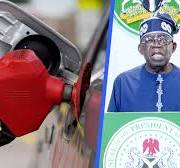
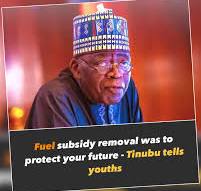
At his inauguration on Monday 29th of May 2023, President Tinubu announced the total removal of the highly controversial fuel subsidy. This removal came as a surprise because successive administrations attempted to remove the subsidy but failed to do so because it is widely popular among citizens, many of whom consider it their major or only benefit from the federal government.
This removal has since impacted petrol prices and the country’s economy. A study by NOIPolls revealed that many Nigerians nationwide have lamented the negative impact of the subsidy removal as fuel cost has affected their spending on other commodities. Additionally, some disclosed they can no longer sustain their businesses, others complained that they now spend more on transportation fares while some criticized the high cost of goods and services.
Hence, this report examines the trajectory of fuel prices after subsidy removal while comparing them to when fuel prices were still subsidised and if the removal is justifiable.
The data used in this report were obtained from the National Bureau of Statistics (NBS), Dataphyte, Statisense, NOIPolls as well as perspective from industry stakeholders.
Source: NOIPolls, 2022.
History of Fuel Subsidies in Nigeria
Historically, fuel subsidies have been a longstanding policy in Nigeria, aimed at cushioning citizens from the volatility of global oil prices. By keeping domestic fuel prices artificially low, the government sought to make energy more affordable for its populace.
The subsidies had been in place since the 1970s. when the government sold petrol to Nigerians at a price below cost, though most consumers weren’t aware of this.
The 1977 Price Control Act made it illegal for some products (including petrol) to be sold above the regulated price. The Olusegun Obasanjo regime introduced this law to cushion the effects of inflation, caused by a worldwide increase in energy prices.
Fuel subsidies have been controversial in Nigeria, and some analysts see them as inequitable. Very few Nigerians own vehicles. Nigeria is among the countries with the least number of vehicles per capita, with 0.06 vehicles per person or 50 vehicles per 1,000 Nigerians. So, critics have argued that the subsidies benefited mainly the elites even though they could afford to buy fuel at market prices.
The subsidies were also considered to be a drain on public finances, costing the government US$10 billion in 2022. About 40% of Nigeria’s revenue in 2022 was spent on fuel subsidies. Fuel subsidies in Nigeria were notorious for their opacity and graft. Billions of dollars were said to have been lost through
corrupt practices in the payment of the subsidies.
These are some of the reasons they were removed.
Fuel Price Trends Post-Subsidy Removal
The immediate aftermath of the subsidy removal saw a sharp increase in petrol prices. According to the NBS, the average retail price for Premium Motor Spirit (PMS) escalated from ₦206.19 per liter in December 2022 to ₦671.86 per liter in December 2023, reflecting a 225.85% surge. This upward trend continued into 2024, with the average price reaching ₦1,184.83 per liter in October, an 87.88% increase compared to ₦630.63 per liter in October 2023. By November 2024, the price further climbed to ₦1,214.17 per liter.
Regional disparities in fuel prices have also been pronounced. In October 2024, Ebonyi State recorded the highest average price at ₦1,292.86 per liter, while Delta State had the lowest at ₦1,050.00 per liter. These variations underscore the uneven impact of subsidy removal across different states.
Source: National Bureau of Statistics (NBS), 2024.
Economic Implications
The surge in fuel prices has had cascading effects on the Nigerian economy. Inflation has been on an upward trajectory, with the rate reaching 33.88% in October 2024, up from 32.70% in September. This inflationary pressure has been largely driven by escalating food and transportation costs. The transportation sector, in particular, has felt the brunt of rising fuel prices. The average fare for bus journeys within cities nearly doubled from ₦649.59 in May 2023 to ₦1,285.41 in June 2023. Similarly, intercity bus fares rose by 42.09% within the same period. This escalation in transportation costs has contributed to a contraction of 50.64% in the transport sector’s GDP in the second quarter of 2023.
Furthermore, the increased cost of living has exacerbated food insecurity. A joint report by the Nigerian government and the United Nations projected that 33 million Nigerians could face food insecurity by August 2025, up from 24.8 million, due to economic hardships and inflation.
Stakeholder Perspectives
The removal of fuel subsidies has elicited varied reactions from different stakeholders. The Nigeria Labour Congress (NLC) has been vocal in its opposition, criticizing the government for not adequately consulting stakeholders before implementing the policy. The arrest of NLC President Joe Ajero in September 2024, following his criticism of the government’s fuel price hike, further heightened tensions between labor unions and the administration.
Conversely, international financial institutions like the WorldBank have acknowledged some positive outcomes from the fiscal reforms. The elimination of subsidies has contributed to a reduction in Nigeria’s fiscal deficit from 6.2% of GDP in the first half of the previous year to 4.4% in the same period of 2024. This improvement suggests enhanced fiscal stability, although it comes amidst significant socio-economic challenges.
Government Measures and Public Response
In response to the public outcry and economic strain, the government initiated a compressed natural gas (CNG) program aimed at providing a cheaper alternative to petrol. The initiative seeks to reduce transport costs by almost 50% and has seen over 100,000 vehicles adapted to use CNG, with a goal to convert 1 million in the next three years. However, the adoption has been slow due to inadequate infrastructure, poor implementation, and limited public awareness, leading to skepticism and misinformation.
Global Comparisons
When compared to other oil-producing nations, Nigeria’s approach to fuel subsidies has been distinctive. While countries like Saudi Arabia and Iran have historically maintained low domestic fuel prices through subsidies, others like Angola have undertaken subsidy reforms similar to Nigeria’s, leading to initial price hikes followed by gradual stabilization. The Nigerian experience underscores the complexities and socio-economic ramifications inherent in subsidy removal policies.
Source: Statisense.
The removal of fuel subsidies under President Tinubu’s administration has led to a sharp increase in petrol prices, significantly affecting the cost of living and economic dynamics
in Nigeria. While the policy aims to reduce fiscal burdens and encourage market efficiency, it has also introduced challenges such as heightened inflation and public discontent. A balanced
approach, incorporating economic reforms alongside measures to mitigate adverse effects on citizens, is essential for sustainable progress.
This team examined how petrol prices have fared since President Bola Tinubu came into power on the 29th of , 2023.
Below are the content lists in the story.
1. History of Fuel Subsidies in Nigeria
2. Fuel Price Trends Post-Subsidy Removal
3. Economic Implications
4. Stakeholders Opinion
5. Government Measures and Public Response
6. Global Comparisons
7. Future Projection
681 total views, 1 views today

