• Login
No Result
View All Result
Crescent University
  • Home
  • Inside Politics
  • Security Post
  • Heritage
  • Brands and Images
  • Lifestyle
  • Fact Checker
  • Airwaves
  • Radiance
  • Newsmaker
  • ABOUT US
  • ADVERTISE 
  • DISCLAIMER
  • Home 1
  • OUR MISSION 
  • OUR TEAM
  • OUR VISION
No Result
View All Result
Crescent University
No Result
View All Result
Home News

Nigeria Records 7 Million Births Annually Amid High Maternal, Infant Mortality — Report

By Daudu Ehikioya Jeremiah, Abiodun Olawunmi Abosede, Akinlolu Oluwabunmi Fiyinfoluwa and Sodipo Olukunle Oladimeji

Online Editor by Online Editor
July 8, 2026
in News
0
0
SHARES
0
VIEWS
Share on FacebookShare on Twitter

ABEOKUTA —

  • Nigeria records over 7 million births every year, yet maternal and infant mortality rates remain dangerously high due to weak healthcare delivery, especially in rural communities.

This was disclosed in a data journalism report by Group 2 students of the Department of Mass Communication, Crescent University, Abeokuta, released as part of their MAS 301 coursework.

According to data sourced from the National Population Commission [NPC], UNICEF, and the World Health Organization [WHO], Nigeria remains Africa’s most populous country with a rapidly growing population. However, WHO still rates the country’s maternal mortality as “High” while infant mortality remains “Significant.”

The report identified malaria, infections, and malnutrition as the leading causes of infant deaths. It noted that rural communities with little or no access to functional primary healthcare centers are the most affected.

Healthcare Gap Behind The Numbers

Analyzing the data, the group stated that Nigeria’s challenge is not population growth, but survival.

“For every 7 million babies born, too many mothers and infants do not live to see their first birthday because of preventable causes,” the report stated. “This is not a population problem. It is a healthcare delivery problem.”

The students warned that without urgent action, Nigeria’s potential demographic dividend could turn into a demographic disaster.

Human Angle

The report gave a human face to the statistics, citing the case of a pregnant woman in a rural area of Ogun State whose nearest clinic is hours away and lacks personnel.

“These are not just figures. These are mothers, babies, and futures,” the report emphasized.

Recommendations

Speaking on the findings, Lead Researcher and Public Affairs Analyst, *Comrade Kunle Sodipo*, called on government at all levels to prioritize primary healthcare.

“Population growth is good for the economy only if those people survive and thrive,” Sodipo said.

He recommended three immediate actions:
1.  Adequate funding for Primary Healthcare Centers in all 774 Local Government Areas
2.  Training and deployment of skilled birth attendants to rural areas
3.  Mass public education on nutrition, malaria prevention, and postnatal care

“We cannot celebrate 7 million births if we are silent about the mothers and babies we are losing,” he added.

Call To Action

The group urged government to invest in people, not just population, citizens to demand healthcare in their communities, and journalists to use data to hold power accountable.

The report concluded: “A growing population means nothing if we are not growing in survival.”

_The MAS 301 Data Journalism project used NPC, UNICEF, and WHO data to move from raw figures to analysis, human impact, and policy recommendations._

#DataJournalism #MAS301 #CrescentUniversity #HealthForAll #FundPHC #Nigeria
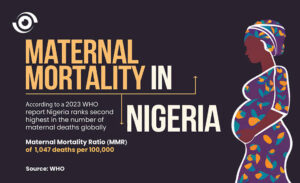
_Data Sources: NPC, UNICEF, WHO_ DATA - The Numbers Don’t Lie 1. 7,000,000+ babies are born in Nigeria every year. We are Africa’s most populous country and our population is still growing fast. 2. Maternal Mortality: Still rated "High" by WHO. 3. Infant Mortality: Still "Significant". 4. Top Killers of Infants: Malaria, infections, malnutrition. 5. Most Hit: Rural communities with little or no access to hospitals. _Sources: National Population Commission, UNICEF, WHO_ A - ANALYSIS What This Data Means Nigeria is growing in numbers, but not in survival. We have a high birth rate but a weak healthcare system to support those lives. The gap is clear: For every 7 million babies born, too many mothers and infants don’t live to see their 1st birthday because of preventable causes. This is not a population problem. It is a healthcare delivery problem. T - PROBLEM The Real Issue 1. Weak Primary Healthcare: Especially in rural areas where most deaths occur. 2. Preventable Deaths: Malaria, infections, and malnutrition should not be killing Nigerian children in 2026. 3. Policy Mismatch: We are planning for a bigger population without fixing the system that keeps that population alive. If we don’t act, our demographic dividend will become a demographic disaster. P - HOOK/HUMAN FACE Behind the Statistics Imagine Aisha in a village in Ogun State. She is pregnant with her 3rd child. The nearest clinic is 2 hours away and has no nurse. If complications come, she becomes part of the "High Maternal Mortality" figure. If her baby survives birth but gets malaria, he becomes part of the "Significant Infant Mortality" figure. These are not just figures. These are mothers, babies, and futures. H - STORY/ SOLUTION The Expert View As a Public Affairs Analyst and Security Expert, Comrade Kunle Sodipo - CKS says: > "Population growth is good for the economy only if those people survive and thrive. Government must prioritize 3 things now: > 1. Fund Primary Healthcare Centers in every ward > 2. Train and Deploy Skilled Birth Attendants to rural areas > 3. Mass Maternal Education on nutrition, malaria prevention, and postnatal care" > > "We cannot celebrate 7 million births if we are silent about the mothers and babies we are losing." Y - TAKEAWAY/CALL TO ACTION What Must Happen Now 1. To Government: Invest in people, not just population. #FundPHC 2. To Citizens: Demand healthcare in your community. A life saved is a nation built. 3. To Us as Future Journalists: Let’s use data to hold power accountable. Bottom line: A growing population means nothing if we are not growing in survival. #DataJournalism #MAS301 #CrescentUniversity #HealthForAll #Nigeria JOURNALISTIC JUSTIFICATION Why This Story Matters: We combined birth and mortality data because population cannot be understood in isolation. Growth without survival is a crisis. We used NPC, UNICEF, and WHO because they are the most credible, standardized sources for national demographic and health data. This is data journalism because we moved from raw figures → analysis → human impact → public interest solution. Our goal is not just to report numbers, but to provoke action. _Submitted by: Group 2, MAS 301, Reworked for MAS 318, 400L PT, Department of Mass Communication, Crescent University_ 8th July, 2026

 79 total views,  6 views today

Previous Post

MTN Nigeria has increased the cost of its data plans.

Next Post

Uncovering the USAID

Online Editor

Online Editor

Next Post

Uncovering the USAID

Leave a Reply Cancel reply

Your email address will not be published. Required fields are marked *

Recommended

Does Where a Student Lives Affect WASSCE Success? What Nigeria’s Education Data Reveals

1 day ago
Nigeria Cuts Child Mortality by Nearly 40% in 34 Years, But Newborn Deaths Remain Stubbornly High

Nigeria Cuts Child Mortality by Nearly 40% in 34 Years, But Newborn Deaths Remain Stubbornly High

1 day ago

Trending

No Content Available

Popular

No Content Available
Facebook Twitter Instagram Pinterest Youtube
Crescent University

Follow Us

Copyright 2022 by Crescent University, Abeokuta Designed by CYBERWARRIOR.

No Result
View All Result
  • Home
  • Inside Politics
  • Security Post
  • Heritage
  • Brands and Images
  • Lifestyle
  • Fact Checker
  • Airwaves
  • Radiance
  • Newsmaker

Copyright 2022 by Crescent University, Abeokuta Designed by CYBERWARRIOR.

Welcome Back!

Login to your account below

Forgotten Password?

Retrieve your password

Please enter your username or email address to reset your password.

Log In