

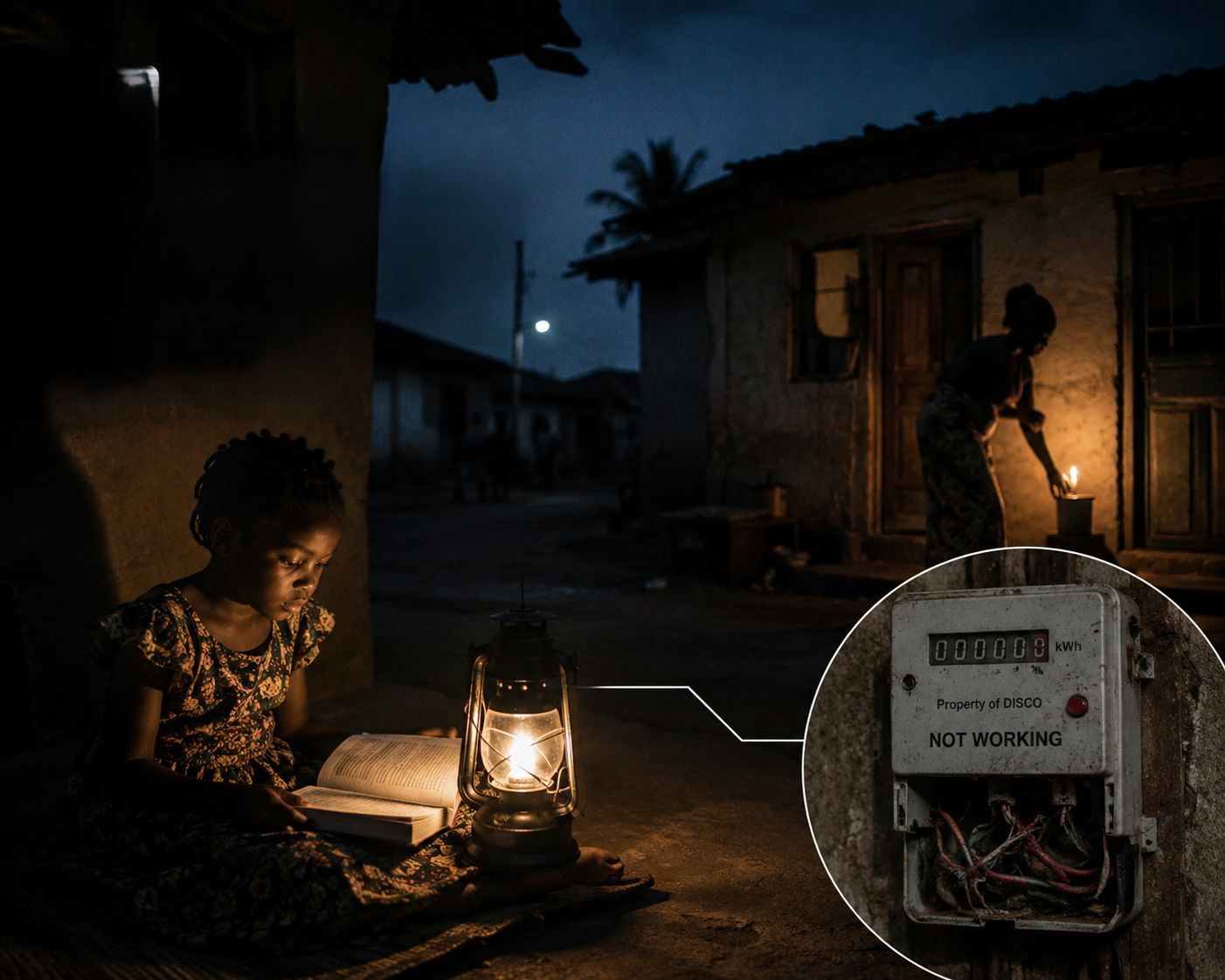
For millions of Nigerian households and businesses, the monthly electricity bill is not simply a statement of consumption. It is often a source of anxiety and dispute. While national conversations on power tend to focus on generation shortfalls and grid failures, a more fundamental issue of trust sits at the exact point where the service meets the consumer: the meter.
Data from the Nigerian Electricity Regulatory Commission (NERC), the statutory body responsible for regulating Nigeria’s electricity industry, shows that more than half of registered electricity customers in the country still have no meter. This leaves millions of households and businesses dependent on estimated billing, a practice that has become one of the most persistent sources of conflict between consumers and electricity distribution companies (Discos).
The Scale of the Metering Gap
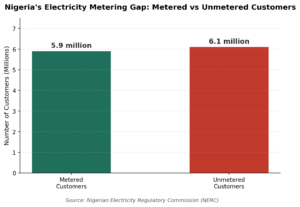
According to NERC’s latest industry figures, Nigeria has approximately 12,000,000 registered electricity customers. Of this number, only 5,900,000 are metered, while 6,100,000 remain unmetered. This means 50.8 per cent of all registered electricity customers in Nigeria have no meter.
| Data Category | Raw Figure |
| Total Registered Electricity Customers | 12,000,000 |
| Metered Customers | 5,900,000 |
| Unmetered Customers | 6,100,000 |
| Percentage Unmetered | 50.8 per cent |
Source: Nigerian Electricity Regulatory Commission (NERC)
The figures effectively describe two different electricity experiences within the same country. The metered minority, numbering 5.9 million customers, can track their consumption and pay only for the electricity they use, with billing that is transparent and verifiable. The unmetered majority, at 6.1 million customers, has no such visibility. Their monthly charges are instead determined through estimated billing, a system in which Discos approximate consumption in the absence of a meter reading.
In practical terms, for every customer who pays for electricity actually consumed, another customer pays for a figure assigned to them. This gap in metering does not merely inconvenience consumers; it reflects a structural weakness at the core of Nigeria’s power sector.
What the Numbers Mean for Households and Businesses
The consequences of the metering gap extend beyond billing inconvenience.
For unmetered customers, estimated bills, often described by consumers as “crazy bills”, can be inflated and bear little relation to the actual power supplied, particularly in areas where electricity supply remains erratic. This places pressure on household budgets and complicates cost planning for small businesses that cannot accurately forecast their utility expenses.
For metered customers, the impact is less direct but still significant. Revenue losses that Discos incur from unmetered accounts and electricity theft are often factored into broader tariff calculations, meaning inefficiencies in the unmetered segment can contribute to upward pressure on tariffs across the board.
For the power sector as a whole, the metering gap undermines the financial health of Discos. Without accurate metering, distribution companies cannot fully account for energy sold or collect revenue efficiently, limiting their capacity to invest in network upgrades. This creates a cycle in which low revenue collection leads to poor maintenance, which in turn drives customer dissatisfaction and reluctance to pay, further straining Disco finances.
Industry estimates suggest that the broader inefficiencies tied to this cycle, including tariff shortfalls and subsidy costs, have cost the sector more than N12.5 trillion over the past decade, with the metering gap sitting at the centre of the problem.
Taken together, these figures point to a power sector where the absence of a basic infrastructure component, the meter, continues to shape financial outcomes for consumers, distribution companies and the wider economy.
Consumer Complaints and the Supply Reality
NERC data further indicate that complaints tied to estimated billing account for the largest share of consumer grievances submitted against Discos nationwide. Many electricity users report being billed for power they say was never supplied, a concern that is especially pronounced in communities experiencing limited or unreliable electricity access.
Despite periodic tariff adjustments, average daily power supply in several parts of the country remains below 12 hours, a gap that continues to raise questions among consumers about value for money in the sector.
What Analysts Are Saying
Speaking on the issue, energy analyst Mr Ehikioya Jeremiah Daudu said accelerated metering would significantly improve accountability and reduce recurring disputes between consumers and electricity distributors. He noted that widespread metering is fundamental to building trust and ensuring fairness and sustainability in the power sector, and warned that without it, estimated billing will continue to undermine ongoing reforms.
Although NERC has issued multiple regulatory directives, and the Federal Government introduced the National Mass Metering Programme (NMMP) to close the metering gap, available data suggest that progress has been slow. This has renewed concerns over the pace of implementation and the sector’s ability to shield consumers from arbitrary billing practices going forward.
148 total views, 2 views today