
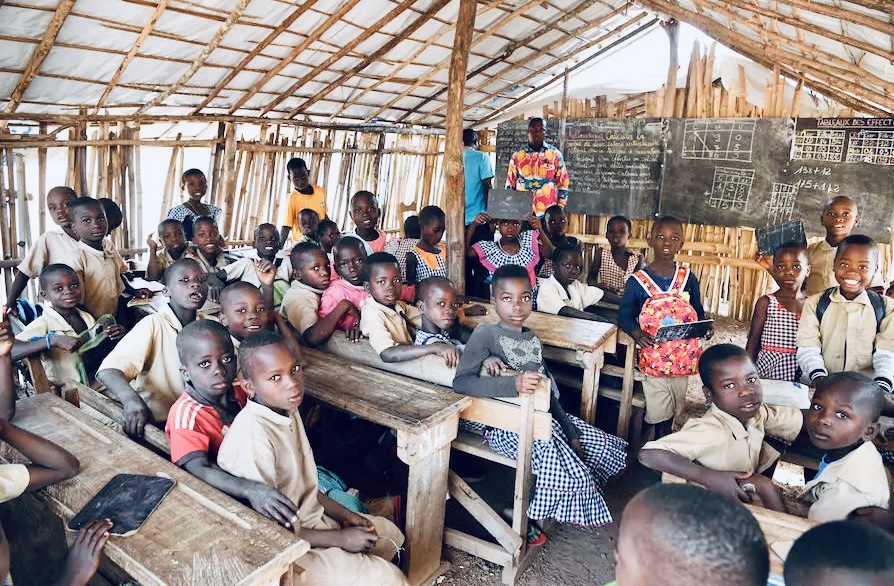
Despite record increases in Nigeria’s education budget over the past decade, millions of pupils and students across the country continue to learn in overcrowded classrooms, dilapidated school buildings and institutions struggling with inadequate teaching materials, raising fresh concerns about the effectiveness of public spending in the sector.
A data-driven analysis of federal budget documents, government expenditure records and international education reports reveals a persistent disconnect between government allocations and actual improvements in learning conditions.
The investigation, based on federal appropriation documents, expenditure records published on GOVSPEND.NG, and reports by UNESCO and UNICEF, examined whether rising education budgets have translated into measurable improvements in classrooms, school infrastructure and learning outcomes.
The findings suggest that while education spending has increased significantly in nominal terms, the quality of implementation, project delivery and financial accountability remains a major concern.
Education Allocation Remains Below Global Benchmark:
Federal budget records indicate that education accounted for approximately 7.9 percent of Nigeria’s national budget in 2015.
Although allocations have grown steadily in absolute value, the sector’s share of total government expenditure has consistently remained below the 15–20 percent benchmark recommended by UNESCO for developing countries.
Under the 2025 Appropriation Act, the Federal Government proposed approximately ₦3.52 trillion for education, representing about 7.3 percent of total federal expenditure.
Education analysts, however, argue that budget size alone does not determine educational progress.
Rather, improvements depend on whether appropriated funds are released promptly, transparently managed and effectively converted into classrooms, laboratories, libraries, teaching materials, teacher development and improved learning outcomes.
Spending Records Raise Accountability Questions:
An examination of publicly available expenditure records on GOVSPEND.NG identified numerous payments for education-related projects, including classroom construction, institutional support, school rehabilitation and infrastructure development.
However, the implementation status of several projects could not be independently verified using publicly available information.
While the inability to verify implementation does not, by itself, establish financial impropriety, transparency experts say it highlights longstanding concerns surrounding project monitoring, procurement transparency and public accountability.
UNICEF has similarly stressed that improving education outcomes in Nigeria requires stronger public financial management systems, effective monitoring mechanisms and greater accountability throughout the budgeting and implementation process.
Reality in Public Schools:
The findings are reflected in the conditions observed across many public schools nationwide.
Large class sizes, deteriorating infrastructure, inadequate furniture, shortages of instructional materials and limited access to digital learning resources continue to constrain effective teaching and learning.
Many schools also struggle with insufficient sanitation facilities, inadequate laboratories and libraries, while teacher shortages remain a recurring challenge in several states.
Similar concerns persist within tertiary institutions, where inadequate funding has contributed to ageing infrastructure, obsolete equipment and periodic disruptions to academic activities.
These structural deficiencies continue to affect both the quality of instruction and students’ learning experiences despite increasing public expenditure.
Regional Comparison:
UNESCO data further indicate that several African countries, including Ghana and South Africa, have at different periods devoted a larger proportion of public expenditure to education than Nigeria.
Although these countries continue to face challenges within their own education systems, relatively higher and more sustained investment has contributed to improvements in teacher development, curriculum implementation and school infrastructure.
The comparison underscores that education outcomes depend not only on funding levels but also on consistent implementation, institutional accountability and long-term policy commitment.
Beyond Budget Announcements:
The analysis suggests that Nigeria’s education challenge extends beyond the volume of funds appropriated each fiscal year.
Experts argue that without transparent implementation, independent project verification, efficient procurement processes and continuous monitoring, increased budget allocations are unlikely to produce significant improvements in learning conditions.
Strengthening oversight institutions, expanding public access to expenditure data and improving project monitoring could help ensure that education investments deliver measurable benefits to learners.
Ultimately, education remains one of Nigeria’s most strategic public investments. Ensuring that every naira allocated to the sector translates into improved classrooms, better-equipped schools, qualified teachers and stronger learning outcomes will require sustained political commitment, transparent governance and effective accountability mechanisms.
Until those systemic gaps are addressed, the disparity between education budgets and classroom realities is likely to remain a defining feature of Nigeria’s public education system.
Key Findings
|
Indicator |
Finding |
|
Education allocation (2015) |
Approximately 7.9% of national budget |
|
Education allocation (2025) |
₦3.52 trillion (about 7.3% of total expenditure) |
|
UNESCO benchmark |
15–20% of public expenditure |
|
Major concern |
Weak implementation and monitoring |
|
Common challenges |
Overcrowded classrooms, ageing infrastructure, inadequate learning materials, teacher shortages |
|
Key recommendation |
Stronger transparency, project monitoring and public financial accountability |
Methodology:
This investigation analysed:
- Federal Appropriation Acts and budget documents.
- Public expenditure records available on GOVSPEND.NG.
- Education finance and policy reports published by UNESCO and UNICEF.
- Publicly available information on school infrastructure and learning conditions.
The analysis compared budget allocations with observable education outcomes and implementation evidence to assess whether increased public spending has translated into measurable improvements in Nigeria’s education sector.
131 total views, 8 views today