
Nigeria has increased spending on education over the years, yet many public schools continue to struggle with overcrowded classrooms, inadequate teaching materials and ageing infrastructure. While successive governments have described education as a national priority, an analysis of public expenditure data suggests that increased allocations have not consistently translated into better learning conditions.
This investigation reviewed federal budget documents, expenditure records from GOVSPEND.NG and reports published by UNESCO and UNICEF. The analysis compared education budget trends with publicly available information on school infrastructure and learning conditions to examine whether government spending has produced measurable improvements.
Federal budget records show that education received about 7.9 percent of the national budget in 2015. Although allocations have increased in monetary terms, education’s share of government spending has remained below UNESCO’s recommended 15–20 percent benchmark for developing countries. The 2025 Federal Budget proposed ₦3.52 trillion for education, representing about 7.3 percent of total expenditure.
However, experts argue that budget size alone does not determine educational progress. The real measure is whether funds are released on time, transparently managed and converted into classrooms, learning materials, teacher development and improved student outcomes.
UNICEF has also emphasised that stronger public finance management and accountability are critical to improving education in Nigeria.
An examination of expenditure records on GOVSPEND.NG found substantial allocations for education projects, including school infrastructure and institutional support. However, the implementation status of some projects could not be independently verified using publicly available information. While this does not by itself indicate financial misconduct, it highlights persistent concerns about transparency, project monitoring and public accountability.
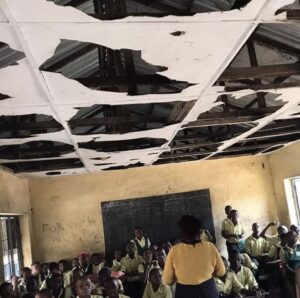
These concerns are reflected in the condition of many public schools across the country.
Overcrowded classrooms, inadequate furniture, shortages of instructional materials and limited access to digital learning facilities continue to affect teaching and learning. Similar challenges persist in tertiary institutions, where funding concerns have contributed to ageing infrastructure and repeated disruptions to academic calendars.
A comparison with other African countries provides additional context. UNESCO data indicate that countries such as Ghana and South Africa have, at different periods, allocated a larger proportion of public expenditure to education than Nigeria. Although these countries face their own challenges, sustained investment has supported improvements in teacher development, curriculum delivery and school infrastructure.
The investigation suggests that Nigeria’s education challenge is not only about the amount budgeted but also about how effectively public funds are implemented and monitored. Budget announcements alone cannot improve classrooms unless projects are completed, resources reach schools and outcomes are measured.
Education remains one of Nigeria’s most important investments. Ensuring that every naira allocated to the sector delivers measurable improvements will require stronger transparency, effective project monitoring and sustained commitment to quality learning. Until then, the gap between government expenditure and classroom reality will continue to define the country’s education system—and the future of millions of Nigerian children.
64 total views, 64 views today